
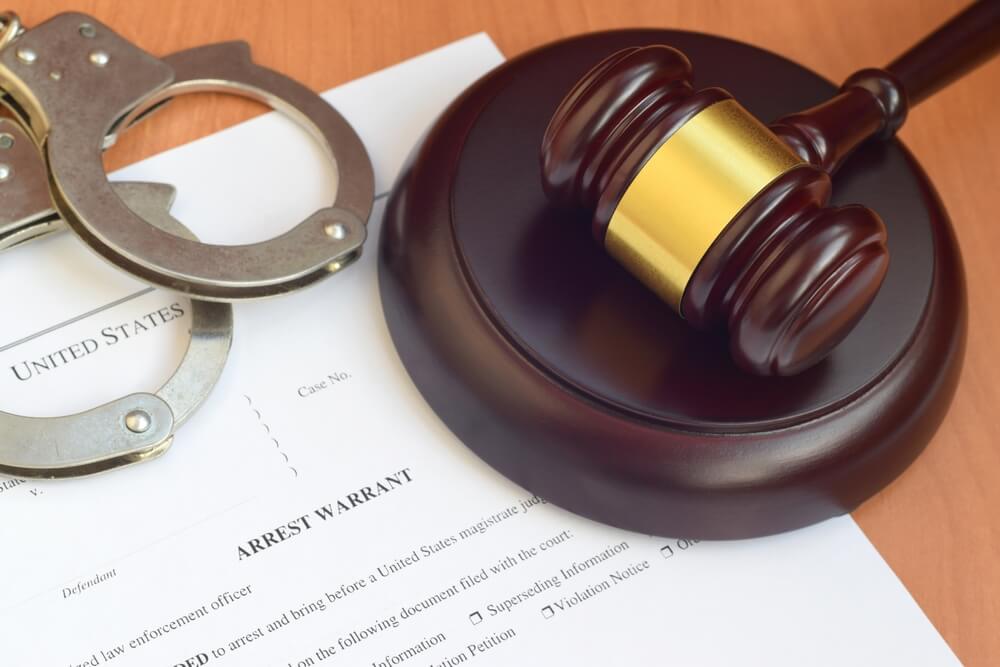
An arrest warrant is a judicial order authorizing law enforcement to take a named or sufficiently identified person into custody. In the federal system, a judge issues a warrant on a complaint when the supporting complaint or affidavits establish probable cause that an offense occurred and that the defendant committed it.
Arrest procedures vary between federal and state systems, so a warrant should always be considered within the jurisdiction that issued it.
How Is an Arrest Warrant Issued?
Federal Rule of Criminal Procedure 4 governs warrants issued on criminal complaints. A warrant must identify the defendant by name or another description providing reasonable certainty and describe the charged offense.
The probable-cause requirement provides a judicial check between an accusation and an arrest authorized by warrant. Officers do not receive unlimited authority merely because an investigation exists.
Someone comparing explanations from different online sources might encounter publications such as Sheffield-based digital reading. For an actual U.S. warrant, however, the warrant itself, court docket, governing rules, and relevant constitutional law carry far greater legal significance.
How Is an Arrest Warrant Executed?
A valid arrest warrant directs authorized officers to arrest the person identified in it. Federal Rule 4 addresses who may execute or serve the warrant and how the warrant is returned to the court after execution.
The circumstances surrounding entry into a home, the location of the arrest, officer identification, and related searches may raise separate Fourth Amendment issues. An arrest warrant and a search warrant serve different functions and should not be treated as interchangeable.
| Document or Action | Primary Purpose | Key Question |
|---|---|---|
| Arrest warrant | Authorize custody | Is this the identified defendant? |
| Search warrant | Authorize search/seizure | What place and property are covered? |
| Summons | Order court appearance | Must the person appear? |
| Initial appearance | Judicial review after arrest | What happens next? |
General publications such as Nottingham-area online reporting can be part of ordinary web research, but warrant execution questions should be checked against the law of the issuing jurisdiction.
What Rights Apply After an Arrest?
In federal cases, an arrested defendant generally must be brought before a magistrate judge without unnecessary delay. Rule 5 governs the initial appearance and related procedures.
The initial appearance can address matters such as the allegations, counsel, release or detention, and future proceedings. Separate constitutional rules may govern police interrogation, searches connected with the arrest, and the use of statements.
Readers may also see legal discussions alongside general articles on sites such as Hull community reporting. Those materials do not determine the rights of a particular arrested defendant.
Common Assumptions That Cause Confusion
Police do not always need an arrest warrant before making an arrest. Depending on the circumstances, the Constitution permits warrantless arrests supported by probable cause, particularly in public settings.
The opposite misconception also causes problems: an outstanding warrant should not be assumed invalid simply because the person was unaware of it. Questions about identity, probable cause, expiration rules, territorial authority, or execution need to be evaluated under the applicable law rather than guessed from the age or appearance of the document.
When Should a Defendant Seek Legal Help?
Legal assistance can be especially important after learning about an outstanding warrant, following an arrest, when the wrong person may have been identified, or when questions exist about entry into a residence or searches made during the arrest.
A defense lawyer can review the warrant and related court record rather than relying on secondhand descriptions. Federal Rule of Criminal Procedure 4 provides the core federal rule, while state warrant procedures may differ substantially.
Frequently Asked Questions
Can police arrest someone without showing the warrant first?
Depending on the circumstances and jurisdiction, officers may not always have to physically display the warrant before taking the person into custody. Rules generally provide procedures for informing the defendant and providing access to the warrant.
Is an arrest warrant the same as a conviction?
No. A warrant authorizes an arrest; it does not establish guilt. Criminal liability is resolved through later proceedings in which charging standards, evidentiary rules, defenses, pleas, and trial rights may become relevant.
Can an arrest warrant be challenged?
Potential challenges depend on the facts. Issues can include probable cause, identity, procedural defects, or related constitutional violations. A lawyer can determine whether a particular objection is legally available and what remedy may apply.
Address a Warrant Through the Legal Process
An arrest warrant can have immediate consequences, but its existence is only one stage of a criminal case. Probable cause, execution rules, initial appearance rights, and later proceedings remain important. A person who discovers an active warrant should avoid relying on rumors about its effect and obtain reliable information about the issuing court and applicable legal options.
This article provides general legal information and is not a substitute for advice from a qualified attorney.