
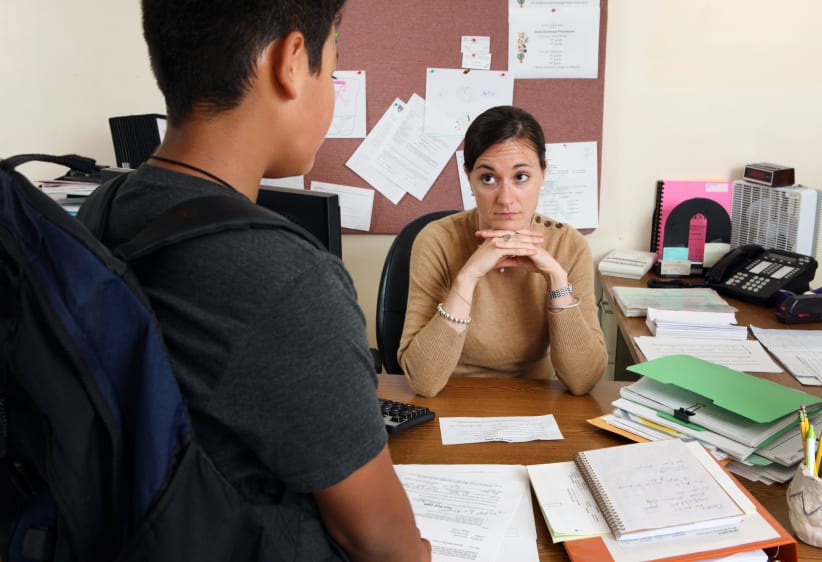
Public schools may discipline students for violations of school rules, but constitutional and statutory protections can limit how suspensions and expulsions are imposed. Federal due process provides an important baseline, while state law and school-district policies often add procedural requirements. Students with disabilities may also receive separate protections under federal disability law.
What Due Process Applies to School Suspensions?
In Goss v. Lopez, the U.S. Supreme Court held that public-school students facing short suspensions have protected interests under the Fourteenth Amendment. For suspensions of 10 days or less, students generally must receive notice of the accusations and, when the allegations are disputed, an explanation of the evidence and an opportunity to give their side.
Families studying discipline rules may compare official documents with broader online reading, but the controlling rules depend on the student’s jurisdiction, the type of school, and the disciplinary action being imposed.
Schools may remove a student immediately in circumstances involving danger or significant disruption, but Goss explains that the required notice and opportunity to respond should then follow as soon as practicable.
Why Expulsions and Longer Removals Require Careful Review
Expulsion is more serious than a brief suspension and can trigger procedures established by state statutes, district regulations, or other applicable laws. The exact hearing, appeal, notice, representation, and evidence rules differ by jurisdiction, so a family’s local student handbook and state education code matter.
Students and parents sometimes supplement official materials with general web content, yet disciplinary deadlines should always be confirmed through the school’s written notice and governing law.
| Discipline Issue | Typical Legal Question | Document to Check |
|---|---|---|
| Short suspension | Was notice and a chance to respond provided? | Suspension notice |
| Expulsion | What hearing and appeal rights apply? | State law and district policy |
| Evidence | What conduct is actually alleged? | Incident report |
| Disability | Do IDEA safeguards apply? | IEP and discipline records |
Students covered by IDEA have additional protections when discipline amounts to a qualifying change of placement. For certain removals exceeding 10 consecutive school days, a manifestation determination may be required to examine whether the behavior was related to the child’s disability or resulted from failure to implement the IEP.
What People Often Get Wrong About School Discipline
A common assumption is that due process means every suspension requires a courtroom-style hearing. Goss does not impose that standard for ordinary short suspensions. The basic process can be informal, provided the student receives the required notice and meaningful opportunity to explain what happened.
Another mistake is assuming identical rules apply nationwide. General resources such as an online information source cannot replace the student’s state law, district code, disciplinary notice, or disability-related protections.
The Supreme Court decision remains a useful federal starting point. Read Goss v. Lopez through Cornell’s Legal Information Institute
When Should a Family Seek Legal Help?
Legal advice may be useful when a student faces expulsion, a long exclusion from school, an unclear or unsupported accusation, retaliation, discrimination, loss of educational services, or a disciplinary action that may conflict with an IEP or disability-related protection.
For a student covered by IDEA, parents should pay close attention to whether a removal constitutes a change of placement and whether the required manifestation review and continued educational services have been addressed.
Frequently Asked Questions
Does a student have a right to explain what happened before suspension?
For public-school suspensions covered by Goss, students generally must receive notice of the charge and an opportunity to present their version. Immediate removal may occur in certain urgent situations, with process following promptly.
Are private schools required to follow Goss v. Lopez?
Goss concerns constitutional due-process requirements involving public education and state action. Private-school discipline may instead depend heavily on applicable statutes, contracts, handbooks, accreditation rules, and other legal obligations.
Can a student with an IEP still be suspended?
Yes. IDEA does not prohibit all discipline, but it creates additional rules for qualifying removals and changes of placement, including manifestation determinations and continued educational-service requirements in specified circumstances.
Review the Rules Before Deadlines Pass
Discipline cases move quickly, and appeal periods can be short under state or local rules. Families should preserve notices, witness information, school policies, communications, and disability records immediately. The central questions are what happened, what procedure was provided, and which federal, state, and local protections apply to that particular student.
This article provides general legal information and is not a substitute for advice from a qualified attorney regarding a specific situation.