
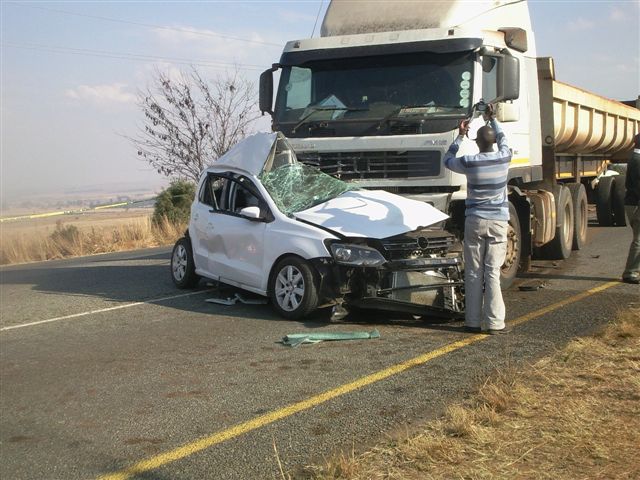
Truck accident claims can be more complicated than ordinary car accident cases because several businesses or individuals may have relevant responsibilities. State negligence law usually controls the injury claim, while federal motor-carrier regulations may provide additional evidence concerning commercial trucking operations.
Determining who controlled the driver, vehicle, cargo, and maintenance can therefore become an important early step.
Who May Be Responsible for a Truck Crash?
The truck driver may be responsible when negligent driving contributed to a collision. Depending on the facts and applicable law, a motor carrier, vehicle owner, maintenance provider, or another business may also become part of the investigation.
Understanding these relationships requires more than reading broad legal information resources. Contracts, employment records, dispatch instructions, ownership documents, and regulatory records may reveal who actually controlled particular activities.
Why Carrier Responsibility Matters
Commercial carriers operate under federal and state safety requirements. FMCSA rules address subjects including driver hours, vehicle inspection, maintenance, and safe commercial vehicle operation.
FMCSA states that motor carriers must systematically inspect, repair, and maintain commercial vehicles under their control. Its hours-of-service rules also regulate driving and on-duty periods for covered operations. FMCSA motor carrier safety guidance
Which Records Can Matter Most?
Commercial trucking operations can generate far more records than a typical passenger-car trip. Electronic logging information, dispatch records, maintenance documents, inspection reports, photographs, dash-camera footage, and cargo paperwork may become relevant.
Keeping personal claim documentation records organized is equally useful. Medical bills, wage records, photographs, correspondence, and receipts can establish losses independently of the trucking company’s evidence.
| Record | Possible Purpose | Issue Examined |
|---|---|---|
| Driver logs | Driving and duty periods | Fatigue questions |
| Maintenance files | Repair history | Vehicle condition |
| Dispatch records | Trip instructions | Operational control |
| Medical records | Injury documentation | Damages |
How Do Truck Insurance Claims Work?
Commercial vehicle crashes may involve more than one insurance policy or insured entity. Determining available coverage can require identifying the tractor owner, trailer owner, carrier, employer, contractor relationships, and other parties.
Disputes may develop over responsibility, policy interpretation, or settlement value, making accurate insurance dispute records useful during review.
Insurance coverage and tort liability are related but separate questions. The existence of insurance does not itself prove negligence.
Where Truck Accident Claims Can Go Wrong
A major mistake is treating every truck crash as a simple driver-versus-driver case. Evidence concerning maintenance, scheduling, loading, carrier procedures, or company relationships may matter even when the driver’s conduct remains central.
Another problem is waiting too long to identify records controlled by businesses. Some electronically stored or operational information may not remain available indefinitely under ordinary retention practices.
When Is Legal Guidance Worth Considering?
Serious injuries, fatalities, disputed fault, multiple commercial entities, potentially defective equipment, or complicated insurance coverage can justify obtaining legal advice early.
A lawyer can also evaluate preservation requests, filing deadlines, possible defendants, and whether state or federal rules are relevant. The applicable limitations period depends on the jurisdiction and type of claim.
Frequently Asked Questions
Can a trucking company be responsible for its driver’s crash?
Potentially. Liability depends on the relationship between the parties, the driver’s conduct, state law, and whether acts or omissions by the company contributed to the collision.
Are federal trucking violations automatic proof of liability?
No. A regulatory violation may become relevant evidence, but civil liability still depends on applicable law, causation, admissible evidence, and the circumstances of the crash.
Can several insurance companies be involved?
Yes. Commercial trucking arrangements can involve different owners, carriers, contractors, and policies, although the presence and priority of coverage depend on the specific arrangement.
Preserve the Commercial Evidence
Truck cases often turn on records that ordinary motorists never create. Identifying the businesses involved and preserving relevant evidence early can make later investigation more reliable. Anyone dealing with serious injuries or disputed responsibility should review the rules and filing requirements that apply in the state where the claim arises.
This article provides general legal information and is not a substitute for advice from a qualified attorney about a specific case.